
Receive God's Love, Proclaim the Greatness of the Lord,
Serve Joyfully & Make Missionary Disciples of Jesus Christ
-
 September 16, 2025
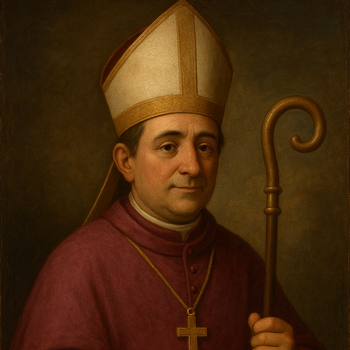
As clergy prepare for Mass, the vesting process is accompanied by solemn actions and prayers. These sacred moments help the bishop prepare himself to serve as shepherd of the Church. The bishop—through baptism, ordination, and episcopal consecration—is set apart as a successor to the Apostles, charged with teaching, sanctifying, and governing the People of God.
The first sign of his office is the pectoral cross, worn close to the heart. It recalls the bishop’s duty to glory only in the Cross of Christ and to lead his flock in the way of sacrifice. The prayer associated with it expresses this dependence: “May I glory only in the Cross of our Lord Jesus Christ, through which the world is crucified to me, and I to the world.”
The episcopal ring is a symbol of fidelity to the Church, the Bride of Christ. Given at consecration, it marks the bishop’s permanent bond of love and authority. The prayer at its imposition declares: “Receive this ring, the seal of fidelity: adorned with undefiled faith, preserve unblemished the Bride of God, His holy Church.”
The bishop also dons the mitre, perhaps the most visible sign of his office. Its two peaks recall the Old and New Testaments, entrusted to him for teaching and interpretation. The accompanying prayer petitions: “Lord, let the helmet of salvation rest upon my head, that I may resist the assaults of the Evil One.”
The crosier, or pastoral staff, completes his distinctive attire. Its curved head represents the Good Shepherd who draws back the lost, while its staff symbolizes steady guidance. With it, the bishop prays: “Keep watch over the whole flock in which the Holy Spirit has placed you as shepherd of the Church of God.”
Beneath the chasuble, the bishop alone wears the pontifical dalmatic, a hidden vestment linking him to the fullness of Holy Orders. It signifies that within his ministry he embraces the offices of deacon, priest, and high priest. Its prayer recalls this unity: “Clothe me, O Lord, in the garment of salvation and of joy, that I may worthily serve in every order of ministry.”
Together, these vestments highlight the bishop’s threefold mission: to guard the faith, to shepherd the flock, and to lead the Church in worship. In vesting, he prays not only to be properly clothed for liturgical service but to be inwardly conformed to Christ, the eternal Shepherd and High Priest.
RINCÓN DE LITURGIA
Vestimentas episcopalesAl prepararse para la Misa, el obispo se reviste con acciones y oraciones solemnes. Estos momentos sagrados lo disponen para servir como pastor de la Iglesia. El obispo—por el bautismo, la ordenación y la consagración episcopal—ha sido apartado como sucesor de los Apóstoles, encargado de enseñar, santificar y guiar al Pueblo de Dios.
El primer signo de su oficio es la cruz pectoral, llevada cerca del corazón. Recuerda el deber del obispo de gloriarse únicamente en la Cruz de Cristo y de conducir a su rebaño por el camino del sacrificio. La oración que la acompaña expresa esta entrega: «Que sólo me gloríe en la Cruz de nuestro Señor Jesucristo, por la cual el mundo está crucificado para mí, y yo para el mundo.»
El anillo episcopal es símbolo de fidelidad a la Iglesia, la Esposa de Cristo. Entregado en la consagración, marca el vínculo permanente de amor y autoridad del obispo. La oración de su imposición declara: «Recibe este anillo, sello de fidelidad: adornado con una fe sin mancha, conserva intacta a la Esposa de Dios, su santa Iglesia.»
El obispo también lleva la mitra, quizás el signo más visible de su ministerio. Sus dos puntas recuerdan el Antiguo y el Nuevo Testamento, confiados a él para su enseñanza e interpretación. La oración que la acompaña pide: «Señor, que el yelmo de la salvación repose sobre mi cabeza, para que resista los ataques del maligno.»
El báculo pastoral, o cayado, completa sus insignias distintivas. Su parte curva representa al Buen Pastor que atrae a los que se han extraviado, mientras que su vara recta simboliza la guía firme. Al tomarlo, el obispo ora: «Vela sobre todo el rebaño en el cual el Espíritu Santo te ha puesto como pastor de la Iglesia de Dios.»
Debajo de la casulla, sólo el obispo viste la dalmática pontifical, ornamento oculto que lo une a la plenitud del Orden Sagrado. Significa que en su ministerio están presentes los oficios de diácono, presbítero y sumo sacerdote. Su oración recuerda esta unidad: «Revísteme, Señor, con el vestido de la salvación y de la alegría, para que sirva dignamente en todo orden de ministerio.»
En conjunto, estos ornamentos destacan la triple misión del obispo: custodiar la fe, pastorear al rebaño y guiar a la Iglesia en la alabanza a Dios. Al revestirse, no sólo se prepara exteriormente para el servicio litúrgico, sino que pide ser interiormente configurado con Cristo, el Pastor eterno y Sumo Sacerdote.