
Receive God's Love, Proclaim the Greatness of the Lord,
Serve Joyfully & Make Missionary Disciples of Jesus Christ
-
 December 16, 2025
O Come, O Come, Emmanuel is an Advent hymn of great importance to our faith. For many, it is the musical sound that defines the season of Advent. Its text is derived from the “O Antiphons,” which are specifically assigned to the seven days leading up to Christmas. During these final days of Advent—beginning on December 17—the eager anticipation of celebrating our Lord’s Nativity becomes more pronounced. The readings, proper prayers, and antiphons shift their focus more explicitly toward Christ’s birth rather than his Second Coming, which is the primary emphasis during the earlier part of the season. The O Antiphons thus hold a particularly important place both historically and liturgically.
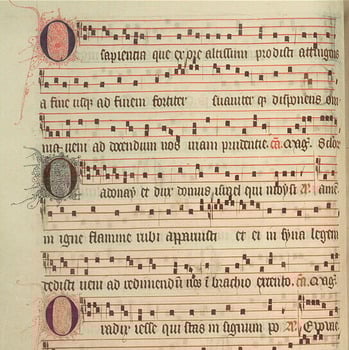
The O Antiphons originated sometime before the sixth century and are first referenced by Boethius. Each antiphon begins with the exclamation “O,” which in medieval manuscripts was often rendered as a large and ornate letter, much like the example shown in the accompanying graphic. Liturgically, these antiphons were originally assigned to the Magnificat, sung at the culmination of Evening Prayer (Vespers) in the Liturgy of the Hours.
In the modern Roman Rite, the O Antiphons have also been incorporated into the verses for the Gospel Acclamation, proclaimed between the Alleluias. The antiphons are as follows:
December 17: O Sapientia (O Wisdom)
December 18: O Adonai
December 19: O Radix Jesse (O Root of Jesse)
December 20: O Clavis David (O Key of David)
December 21: O Oriens (O Dawn from on High)
December 22: O Rex Gentium (O King of the Nations)
December 23: O EmmanuelIn the English-speaking tradition, these antiphons are most familiar to us in their combined form as the Advent hymn O Come, O Come, Emmanuel. This synthesis works especially well for Sunday worship, since many Anglicans and Roman Catholics do not attend Mass or the Liturgy of the Hours on a daily basis.
In these final days of Advent, it can be a fruitful devotional practice to prayerfully reflect on the O Antiphons and what they reveal about the nature of God and the mystery of the Incarnation. May we rejoice in these holy encounters with the incarnate Christ.
RINCÓN LITÚRGICO
Las Antífonas “O”
Oh Ven, Oh Ven, Emanuel es un canto de Adviento de gran importancia para nuestra fe. Para muchas personas, su melodía evoca inmediatamente el espíritu de este tiempo litúrgico. El texto del himno se basa en las llamadas Antífonas “O”, que están asignadas a los siete días previos a la Navidad. En estos últimos días del Adviento —a partir del 17 de diciembre— la expectativa gozosa por celebrar el nacimiento de nuestro Señor se intensifica. Las lecturas, las oraciones propias y las antífonas se centran de manera más directa en la venida histórica de Cristo en Belén, a diferencia del comienzo del Adviento, que pone mayor énfasis en su segunda venida al final de los tiempos. Por esta razón, las Antífonas “O” ocupan un lugar muy significativo tanto en la historia como en la liturgia de la Iglesia.
Las Antífonas “O” tienen su origen en los primeros siglos del cristianismo y ya estaban firmemente establecidas en la liturgia romana hacia los siglos VII u VIII. Cada antífona comienza con la exclamación “Oh”, que en los manuscritos medievales solía representarse con una letra grande y ornamentada. Litúrgicamente, estas antífonas fueron asignadas originalmente —y continúan siéndolo hoy— al Magníficat, que se canta al final de la Oración de la Tarde (Vísperas) dentro de la Liturgia de las Horas.
En la forma actual de la Misa, las Antífonas “O” también se ofrecen como versículos opcionales para la Aclamación al Evangelio durante los días del 17 al 23 de diciembre. Las antífonas son las siguientes:
17 de diciembre: Oh Sabiduría
18 de diciembre: Oh Adonai
19 de diciembre: Oh Raíz de Jesé
20 de diciembre: Oh Llave de David
21 de diciembre: Oh Oriente (o Oh Sol naciente)
22 de diciembre: Oh Rey de las naciones
23 de diciembre: Oh EmanuelEn muchas comunidades de habla inglesa, estas antífonas se conocen principalmente a través del canto Oh Ven, Oh Ven, Emanuel, que reúne varios de estos textos en un solo himno. Esta forma unificada surgió en el siglo XIX como una adaptación poética y musical para facilitar su uso en celebraciones dominicales. Sin embargo, en las comunidades de tradición latina, estas antífonas suelen vivirse más directamente dentro de la liturgia diaria y de las devociones propias de los días previos a la Navidad.
En estos últimos días del Adviento, puede ser una práctica devocional muy fructífera meditar y orar con las Antífonas “O”, dejándonos iluminar por lo que revelan sobre el misterio de Dios que viene a habitar entre nosotros. Que podamos alegrarnos en estos encuentros santos con Cristo hecho carne.