
Receive God's Love, Proclaim the Greatness of the Lord, Serve Joyfully & Make Missionary Disciples of Jesus Christ
-
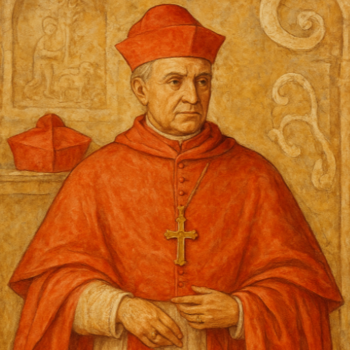
As principal advisors to the Holy Father and senior members of the Church’s hierarchy, Cardinals wear attire that reflects both their unity with the Pope and their readiness to serve the universal Church. Their garments, rich in history and symbolism, express not privilege, but deeper dedication to Christ and His mission.
The most recognizable element of a Cardinal’s dress is the scarlet color. This deep red, seen in the cassock, zucchetto, and biretta, signifies the Cardinal’s willingness to defend the faith—even to the shedding of blood. The red cassock, trimmed with matching piping and buttons, replaces the violet worn by bishops. It is often paired with a red sash and silk fascia bearing the Cardinal’s coat of arms.
The biretta—a square cap with three peaks—and the zucchetto are worn both in liturgical and formal non-liturgical settings. Their use highlights the Cardinal’s rank and his role as a teacher of the faith. During prayer, the biretta is traditionally removed, symbolizing humility before God, while the zucchetto remains as a mark of consecration.
For formal occasions outside the liturgy, Cardinals may wear the ferraiolo, a flowing silk cape in scarlet, representing the dignity of their office and their call to witness in public life. In the liturgy, they may also wear the mozzetta, a short cape over the shoulders, and the rochet, a white linen vestment, recalling continuity with clerical tradition.
The pectoral cross and ring—shared with bishops—carry distinct significance for Cardinals. The cross rests over the heart, a constant reminder of Christ’s sacrifice, while the ring symbolizes their special bond with the Pope and the Church of Rome.
Altogether, the Cardinal’s attire expresses a profound theological truth: that authority in the Church is service. The brilliance of scarlet is not for personal honor, but to remind both wearer and faithful that love for Christ and his people must be courageous, visible, and total.
RINCÓN DE LA LITURGIALa Vestimenta de los Cardenales
Como principales asesores del Santo Padre y miembros más altos de la jerarquía de la Iglesia, los cardenales visten prendas que reflejan su unión con el Papa y su disposición a servir a la Iglesia universal. Su vestimenta, rica en historia y simbolismo, expresa no un privilegio, sino una entrega más profunda a Cristo y a su misión.
El elemento más reconocible de la vestimenta cardenalicia es el color escarlata. Este rojo intenso, presente en la sotana, el solideo y la birreta, significa la disposición del cardenal a defender la fe, incluso hasta derramar su sangre. La sotana roja, adornada con botones y ribetes del mismo tono, reemplaza el color morado usado por los obispos. Suele acompañarse con una faja de seda y, en ocasiones, el escudo de armas del cardenal.
La birreta —un gorro cuadrado con tres picos— y el solideo se utilizan tanto en actos litúrgicos como en ocasiones formales fuera de la liturgia. Su uso resalta la dignidad del cardenal y su papel como maestro de la fe. Durante la oración, la birreta se retira en señal de humildad ante Dios, mientras que el solideo permanece como signo de consagración.
En actos solemnes fuera de la liturgia, los cardenales pueden llevar el ferraiolo, una capa amplia de seda color escarlata que representa la dignidad de su oficio y su testimonio público de fe. En la liturgia, pueden usar también la mozzetta, una capa corta sobre los hombros, y el roquete, una túnica blanca con mangas, que evocan la continuidad con la tradición clerical.
La cruz pectoral y el anillo —compartidos también con los obispos— tienen un significado particular para los cardenales. La cruz, colocada sobre el corazón, recuerda el sacrificio de Cristo, mientras que el anillo simboliza su unión especial con el Papa y con la Iglesia de Roma.
En conjunto, la vestimenta del cardenal expresa una verdad teológica profunda: que la autoridad en la Iglesia es servicio. El brillo del color escarlata no es para el honor personal, sino para recordar al cardenal y a los fieles que el amor a Cristo y a su pueblo debe ser valiente, visible y total.