-
by Adam Beeken
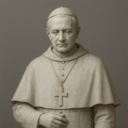
As a bishop serves the Church, his attire extends beyond the liturgical vestments of the Mass. Distinctive garments and insignia mark his office in public settings, in daily prayer, and in his pastoral ministry. Each carries a history and symbolism that recalls his consecration as shepherd of God’s people. READ MORE
Read More
-

by Adam Beeken
On October 1, 1995, at 3 p.m., our current church
was dedicated by Bishop Kendrick Williams. It was
a joyful day that began with a final Mass in the old
church and culminated in the dedication of our
new space. The liturgy included the blessing of the
church, altar, and tabernacle, marked with
candles, music, oil, flame, and solemn ritual. This
powerful celebration remains central to our parish,
as our church was set apart to inc . This
anniversary also serves as the kickoff to our
novena leading to our parish feast, October 7—the
Memorial of Our Lady of the Rosary. READ MORE
Read More
-

by Adam Beeken
As clergy prepare for Mass, the vesting process is accompanied by solemn actions and prayers. These sacred moments help the bishop prepare himself to serve as shepherd of the Church. The bishop—through baptism, ordination, and episcopal consecration—is set apart as a successor to the Apostles, charged with teaching, sanctifying, and governing the People of God. READ MORE
Read More
-
Read More
-

by Adam Beeken
As clergy prepare for Mass, the vesting process is accompanied by solemn actions and prayers. These sacred moments help the deacon prepare himself to serve at the altar of Christ. The deacon—through baptism and ordination—is set apart for the ministry of service in Word, altar, and charity.
The deacon first dons the alb, that long white garment common to all ordained ministers and altar servers. It recalls the baptismal garment, symbolizing purity and new life in Christ. Secured by the cincture, it prepares the deacon for humble service and reminds him of the call to chastity and self-discipline.
READ MORE
Read More
-

by Adam Beeken
As clergy prepare for Mass, the vesting process is accompanied by solemn actions and prayers. These sacred moments help the priest ready himself to act in persona Christi. The word holy refers to what is set apart for sacred use; in this sense, the priest himself is holy—through baptism and ordination—set apart for the sacraments. READ MORE
Read More
-
 Read More
-
by Adam Beeken
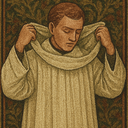
As the clergy prepare for Mass, there are solemn actions and prayers that accompany the vesting process. These sacred moments are intended to help the priest prepare to act In Persona Christi. The word holy refers to things set apart for sacred use. In this sense, the priest himself is holy—by virtue of his baptism and ordination—set apart for the sacred work of the sacraments. READ MORE
Read More
-
by Adam Beeken
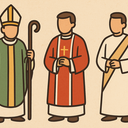
There are few places in modern culture where it is considered normal to wear a tunic undergarment, an additional robe, and a distinctive form of headwear. Such ceremonial attire is now reserved for religious, legal, and limited political settings. READ MORE...
Read More
-
by Adam Beeken
LITURGY CORNER
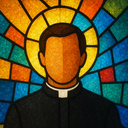
Priestly Attire: The Collar
It’s almost a given in our Catholic world: if you run into a priest outside of Mass, he’ll likely be wearing that distinctive white collar. Without it, how would you know who was clergy? Interestingly, this modern collar is a fairly recent invention. The removable style was created in 1865 by Rev. Donald McLeod, a Presbyterian minister. It quickly caught on among liturgically minded clergy and, by the mid-1880s, was a well-established and expected part of Roman Catholic clerical dress.
Read More
-
by Mary Queen School
CLICK HERE for the Mary Queen School Day traffic flow map.
Read More
-

Mary Queen of the Holy Rosary Parish in Lexington, KY, is seeking a passionate and dynamic Youth Ministry Assistant for approximately ten hours a week, to help lead our efforts in nurturing vibrant faith among young people on Wednesday nights. SEE THE JOB DESCRIPTION HERE
Read More
-

Mary Queen of the Holy Rosary Parish in Lexington, KY, is seeking a passionate and dynamic Youth Ministry Assistant for approximately 10 hours a week, to help lead our efforts in nurturing vibrant faith among young people on Sunday nights. SEE JOB DESCRIPTION HERE
Read More
-

by Adam Beeken
During the week of July 28–August 1, I was blessed with the opportunity to work with 12 students entering grades 5–9 during our first-ever Liturgical Music Camp. This wasn’t designed to be a typical music camp where participants simply gather, rehearse, and perform at the end of the week. Instead, it was intended to introduce young people to the why and how behind the music we create in our Catholic faith. READ MORE
Read More
-

by Adam Beeken
Of all the Hours of the Liturgy of the Hours, the Office of Readings is often the most flexible—and the most overlooked. Unlike Morning Prayer (Lauds) or Evening Prayer (Vespers), which are tied to specific times of day, the Office of Readings can be prayed at any time. This makes it particularly suitable for those with unpredictable schedules or for those looking to deepen their prayer life. READ MORE
Read More
-
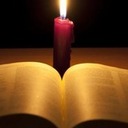
by Adam Beeken
Clergy are obligated to pray two of the Liturgy of the Hours daily. One of these is Evening Prayer, historically known as Vespers. It begins with a simple but striking dialogue:
O God, come to our aid.
O Lord, make haste to help us.
READ MORE
Read More
-
by Adam Beeken
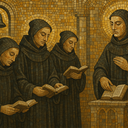
Generally the first of the Liturgy of the Hours that most people pray is Morning Prayer (historically known as Lauds). The liturgy begins with this simple dialogue:
Lord, open our lips.
And we shall praise your name.
This dialogue can be followed by the invitatory psalm and then a hymn.
READ MORE
Read More
-
by Diocese of Lexington
Read More
-
by Adam Beeken
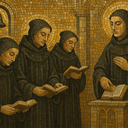
The Divine Office and its prayers have roots in Jewish tradition when sacrifices and prayers would be offered during the morning and evening. Additionally there is a mention of seven times of daily prayer in Psalm 119. Early Christian adaptations of these prayers developed differently in various regions and religious communities. Typically, there would be morning and evening prayers as well as shorter prayers at the 3, 6, & 9th hours of the day. With the formalization of Benedictine order there developed a standard for praying the hours which many religious communities would adapt themselves. READ MORE
Read More
-

by Tara Kaufmann
Mary Queen of the Holy Rosary Catholic Church is seeking a bilingual (English/Spanish) Parish Secretary to serve as a vital member of our front office team. The ideal candidate will have excellent communication and interpersonal skills, a heart for service, and a strong ability to work with people from diverse backgrounds.
This full-time position is more than administrative—it is a ministry of hospitality and service, rooted in the mission of the Church. The Parish Secretary is often the first point of contact for parishioners and visitors and should represent the parish with professionalism, warmth, and Christian charity. See the FULL JOB DESCRIPTION HERE
Read More
See More